What makes us who we are? It's a deceptively simple question. We might describe ourselves through our personalities, our interests, our values or the things we do. But identity runs deeper than any of those things. It shapes how we think, how we behave and, perhaps most interestingly, what we believe we're capable of becoming. Our identity influences our actions, while our actions continually reinforce our identity. Over time, the relationship becomes so deeply embedded that we rarely stop to question it. We simply become the people we believe ourselves to be.
Which raises an interesting question. What happens when we stop believing we're the person we once were? And what happens when the same thing occurs to a brand?
Kobe Bryant was famously obsessive about basketball. His extraordinary work ethic became the stuff of sporting legend. Early mornings, endless practice, relentless attention to detail. He wasn't simply interested in being good; he was consumed by the pursuit of greatness. It's easy to explain that behaviour through ambition, discipline or an overwhelming desire to win. But there's another way of looking at it. Perhaps Bryant didn't spend countless hours practising simply because he'd set himself a series of targets. Perhaps he did it because being an exceptional basketball player had become fundamental to who he believed himself to be. Excellence wasn't just something he pursued. It was part of his identity.
The distinction is subtle but important. One person gets up at five in the morning because they've committed to a training programme. Another gets up because they're an athlete. It's simply what they do. In his book Atomic Habits, James Clear explores this relationship between identity and behaviour, arguing that lasting change becomes easier when we stop concentrating exclusively on what we want to achieve and start thinking about who we want to become. Rather than focusing on the goal of running a marathon, we begin to think of ourselves as runners. Rather than trying to read more books, we become readers. Our behaviour becomes an expression of our identity, rather than simply a means of achieving a particular outcome. Of course, the relationship works in both directions. Repeated actions reinforce our sense of self, just as our sense of self influences the actions we take.
Bryant took this idea somewhere even more interesting. During a difficult period in his career, he consciously developed an alter ego: the Black Mamba. A character that allowed him to separate his personal difficulties from the ruthless, focused competitor he wanted to be on the basketball court. The Black Mamba wasn't simply a nickname or a marketing exercise. It represented a particular mentality, a set of expectations and a way of approaching his craft. In creating it, Bryant was consciously constructing an identity that could influence his behaviour. He wasn't simply deciding what he wanted to achieve. He was defining the person he needed to become to achieve it.
Of course, identity doesn't only exist within individuals. Teams, organisations, communities and cultures develop shared beliefs about who they are and what they stand for. Those beliefs influence how people behave, often without anyone having to explicitly tell them. Over time, expectations become habits, habits become standards and standards become part of an organisation's collective identity. The interesting thing is that this process can be extraordinarily powerful, both when it's working and when it begins to unravel.
Consider Manchester United under Sir Alex Ferguson. For more than two decades, the club became synonymous with winning. Excellence wasn't simply an ambition; it was an expectation. Players arrived knowing the standards demanded of them, and those standards were reinforced by the manager, the dressing room, the supporters and the history being created around them. Former players such as Roy Keane, Gary Neville and Rio Ferdinand regularly describe an environment where commitment, accountability and the refusal to accept defeat were non-negotiable. These weren't simply values written on a dressing-room wall. They were behaviours expected of everyone who represented the club, from established stars to young players coming through the academy.
Winning became part of Manchester United's identity, and that identity helped sustain the culture that produced the results. New players adopted the behaviours of those around them, standards became collective expectations and winning reinforced the belief that sucess was what the organisation existed to achieve. It wasn't that every player was naturally exceptional or that the club was immune to failure. It was that the environment encouraged people to behave in ways consistent with the identity they had inherited. To represent Manchester United was to accept a particular set of expectations about who you were supposed to be.
But identity isn't permanent, and the story of Manchester United since Ferguson's departure offers an interesting contrast. Changes in leadership, inconsistent recruitment, managerial upheaval and controversial ownership have coincided with a prolonged decline in the standards once associated with the club. The financial story is particularly striking. The Glazer family's leveraged takeover burdened the club with significant debt, while enormous sums subsequently left the business through financing costs and other payments. It's too simplistic to attribute everything that happened on the pitch to ownership, and football is considerably more complicated than any single explanation. But it's difficult to ignore the wider cultural question. What happens when an organisation that once defined itself through excellence begins to normalise mediocrity? When the decisions and behaviours at the top no longer appear to reflect the identity the organisation claims to possess, how long can the culture beneath them remain unaffected?
The badge remains. The colours remain. The history remains. Manchester United is still one of the most recognisable names in world football. But recognition and identity aren't quite the same thing. A club can continue to look like Manchester United while struggling to behave like the Manchester United that generations of supporters came to recognise. Perhaps the most damaging thing about a prolonged period of underachievement isn't simply the results themselves. It's the possibility that the people within the organisation gradually adjust their expectations of what being successful actually means.
Which brings us to branding. When we talk to clients about brand identity, the conversation often begins with visual things. Logos, typography, colours, photography and the recognisable elements that make one business look different from another. Understandably so, because they're the most visible expressions of a brand. But they're not necessarily its identity. They're a way of communicating something that should already exist beneath the surface: a set of beliefs, characteristics and behaviours that give the organisation a distinctive sense of itself.
Psychologist Carl Jung explored the concept of the persona, the face we present to the outside world and the social identity we develop in response to the expectations of others. Although Jung was writing about human psychology rather than commercial branding, the parallel is interesting. A visual identity is, in some respects, a brand's public face. It helps communicate character, establish recognition and shape expectations. But just as a person's appearance doesn't tell us everything about who they are, a logo cannot fully define the organisation behind it. The outward expression might be carefully considered, beautifully designed and immediately recognisable, but its meaning ultimately depends on the reality it represents.
A business might look sophisticated but behave carelessly. It might claim to be innovative while resisting every opportunity to change, or talk endlessly about hospitality while treating its own people poorly. These contradictions matter because people experience brands through much more than their visual identities. They experience them through products, services, decisions, interactions and the countless small behaviours that collectively establish a reputation. Over time, those experiences become a far more persuasive definition of the brand than anything it might say about itself.
Identity, in other words, isn't simply what we claim to be. It's what our behaviour consistently reveals.
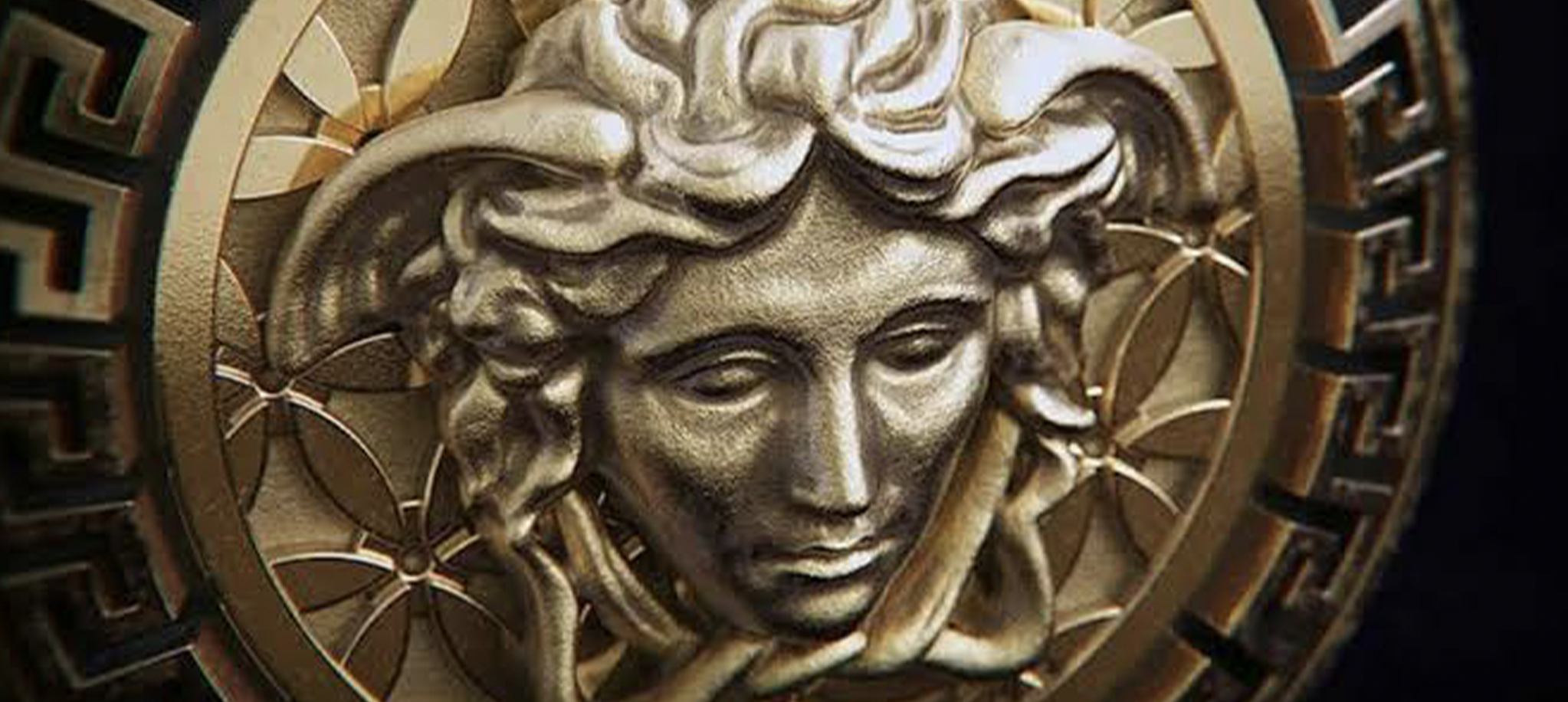
Few fashion houses illustrate the relationship between identity, personality and commercial success quite like Versace. In the 1990s, Versace wasn't simply a luxury fashion label; it was a cultural force. Gianni Versace created a world of glamour, sexuality, celebrity and unapologetic excess that helped define the visual language of an era. The supermodels, the spectacular runway shows, the Medusa, the baroque prints and the extraordinary confidence of the clothes themselves all belonged to a single, unmistakable creative universe. Versace didn't simply have a recognisable aesthetic. It had an attitude, a particular way of seeing the world that people wanted to be associated with.
That distinction is important. The visual identity was powerful because it expressed something genuine about the creative conviction behind the business. Gianni Versace wasn't following a formula for what luxury fashion should look like. He was creating a world that reflected his own tastes, instincts and beliefs. In doing so, he gave the house an identity that was both commercially valuable and culturally significant. In 1996, the company reportedly generated approximately $557 million in revenue, equivalent to around $1.14 billion in 2025 dollars. The business was enormously successful, but perhaps its greatest achievement was the extent to which Versace had become part of the wider cultural conversation.
Nearly three decades after Gianni's death, the picture is rather different. Versace remains one of the most recognisable names in luxury fashion, yet its recent commercial performance tells a more difficult story. Revenue fell from approximately $1.1 billion in fiscal 2023 to $821 million in fiscal 2025, while the latter figure is also considerably below the inflation-adjusted revenue reported in 1996. These aren't perfectly comparable measures, given the changes in ownership, licensing and the structure of the business over time. Nevertheless, they suggest a fashion house that has struggled to translate its extraordinary heritage and recognition into sustained commercial momentum.
In December 2025, Versace was acquired by the Prada Group, which has since identified the restoration of the brand's desirability as a central priority. The language is revealing. Versace hasn't lost its name, its archive, its symbols or its history. The Medusa remains instantly recognisable, the prints are unmistakable and the visual vocabulary established by Gianni is still very much part of the house. But recognition isn't the same as desire. A brand can retain everything that makes it identifiable while gradually losing the cultural energy that once made people want to identify with it.
And there's another fascinating development. Donatella Versace, who spent almost three decades shaping the fashion house following her brother's death, has announced plans to launch an independent fashion and beauty brand in partnership with Revolve Group. While Versace the business attempts to rediscover the creative conviction that once made it so influential, Donatella is setting out to establish something new under her own creative direction. It's an extraordinary situation, and one that raises a question at the very heart of brand identity. What happens when the identity of a business becomes inseparable from the identity of the people who created it?
Of course, it would be unfair to suggest that Versace's changing fortunes can be explained entirely through a loss of identity. Fashion is cyclical, consumer tastes change, competition intensifies and the economics of luxury have evolved enormously since the 90s. Nor is there any guarantee that a new creative direction, whether under an established name or a new one, will automatically produce success. But the situation presents an interesting paradox. A company can own a name, a logo, an archive and an extraordinary history. What it cannot so easily own is the instinct, personality and creative conviction that originally gave those things meaning.
Perhaps Versace's challenge isn't that it has forgotten what it looks like. Perhaps it's that the world it once represented no longer feels quite as compelling as it did. Or perhaps, in trying to preserve the recognisable characteristics of its past, the business has struggled to recreate the restless creative energy that produced them in the first place. After all, Gianni Versace didn't become influential by looking backwards at what Versace used to be. He became influential by creating something that felt unmistakably his own.
There's a difference between preserving an identity and keeping it alive.
There's a temptation in branding to treat identity as something that can be created, packaged and handed over. A strategy document defines the positioning, a set of guidelines establishes the visual language and a launch campaign introduces the new brand to the world. The business has a new identity, and the job is apparently done. Except, of course, it isn't. Because a brand's identity is continually being shaped by the decisions it makes, the people it employs, the products it creates, the experiences it delivers and the opportunities it pursues or chooses to turn down. A brand identity isn't simply a collection of assets. It's an ongoing expression of what an organisation believes itself to be.
For hospitality businesses, this is particularly relevant. A hotel might describe itself as warm and welcoming, but that promise only becomes meaningful through the experience of being welcomed. A restaurant might claim to be generous, but generosity has to exist in the food, the service, the atmosphere and the small decisions made every day. The visual identity can communicate those qualities, give them a recognisable expression and help people understand what to expect. But it cannot manufacture them. If the behaviour doesn't support the promise, the promise eventually loses its meaning.
The strongest brands are those where the identity and the behaviour become almost indistinguishable. Where people don't need to consult a set of guidelines to understand what the brand would do, because the answer feels instinctive. Where the identity influences decisions even when nobody is consciously thinking about branding. It's the organisational equivalent of the athlete who trains because they're an athlete, rather than because they've been told to complete a training programme.
And perhaps this is where the real value of brand strategy lies. Not simply in defining how a business should present itself, but in helping it understand what it genuinely stands for, what makes it different and how those beliefs should influence the way it operates. A well-considered identity gives people something to believe in and, importantly, something to behave in accordance with. The visual expression makes that identity recognisable, but the organisation itself has to make it real.
Perhaps the most interesting thing about identity is that it isn't fixed. We can change who we believe ourselves to be. We can develop new habits, establish new standards and gradually become different versions of ourselves. Organisations can do the same, but it requires more than a new appearance. For a business to genuinely change its identity, it has to examine the beliefs and behaviours that sustain it. A rebrand can help articulate that change, give it direction and make it visible, but it cannot substitute for the change itself.
Which brings us back to Kobe Bryant. The Black Mamba wasn't powerful because it had a memorable name or a distinctive symbol. It was powerful because Bryant gave that identity meaning through his actions. Manchester United's reputation for excellence wasn't created by the badge on its shirt, but by the standards that generations of players upheld. And Versace's extraordinary cultural influence wasn't simply the product of its Medusa or its unmistakable prints, but the creative conviction that made those symbols worth recognising in the first place.
Perhaps that's the most useful lesson for brands. Identity isn't something you possess simply because you've defined it, and it isn't something you can preserve indefinitely through recognition alone. It has to be continually expressed, reinforced and, when necessary, evolved. You don't become something simply by saying you are. You become it by behaving that way, consistently, until it becomes impossible to imagine being anything else.